
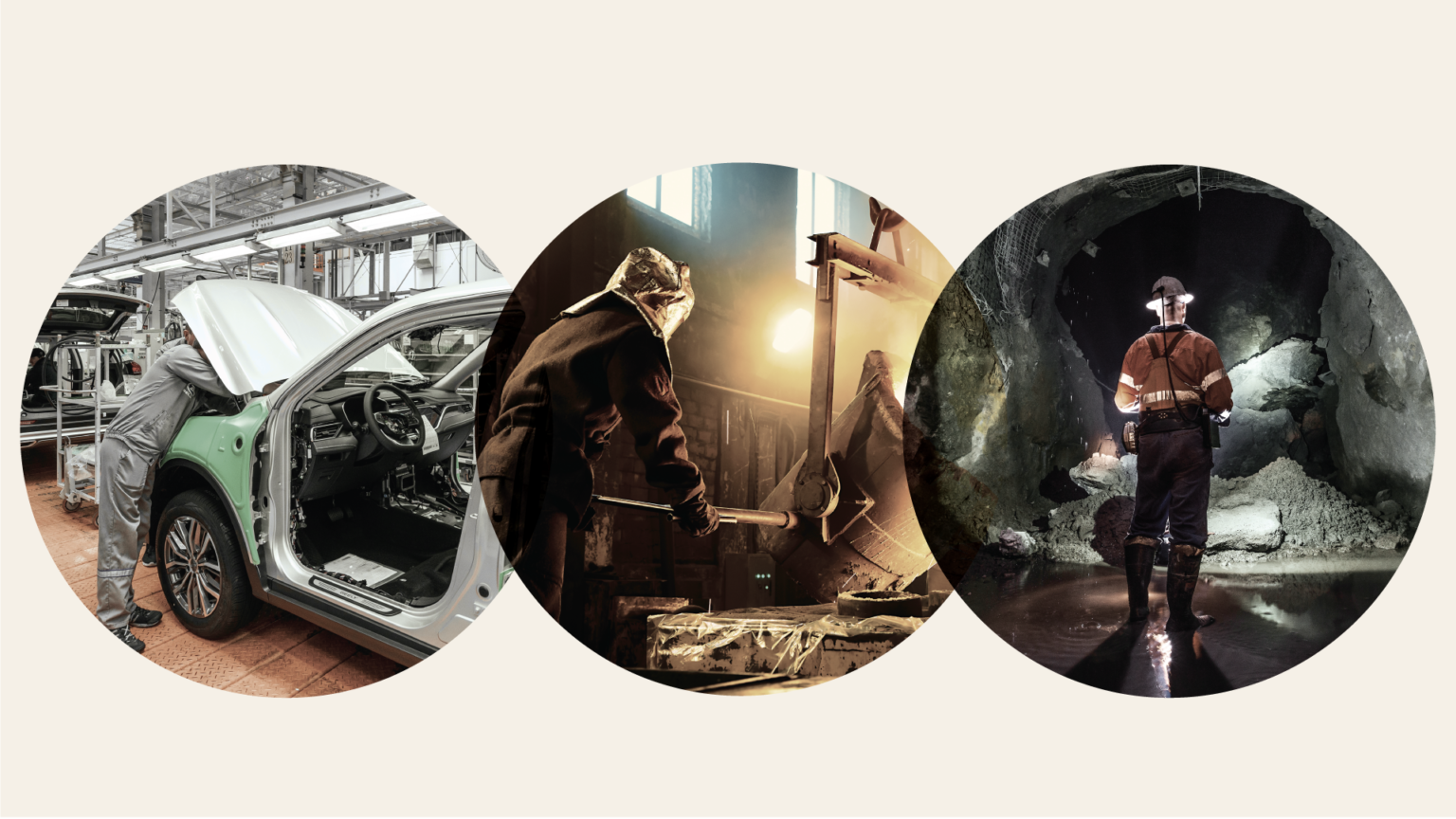
Yesterday, Prime Minister Mark Carney and Ontario Premier Doug Ford announced an $8.7 billion plan for steel, autos, and critical minerals. The associated package is bold and ambitious, responding to the crisis in a way that goes beyond simply protecting Ontario’s industrial economy. Instead, it takes a strategic approach to industrial policy, providing an opportunity to build Canada’s upstream industrial base and strengthen its autonomy.
What works
The plan chooses reinvestment and coordination with firms across the supply chain over doubling down on protection. That is the right call. Protection works when the problem is cheap imports flooding your market. It doesn’t work when the problem is that your main export market has closed behind tariffs. Our problem is the latter, and tariffs alone cannot fix it.
In an increasingly dangerous world, Canada needs a steel industry, full stop. But in addition, the government’s nation-building agenda creates demand-pull on upstream sectors like steel. The government’s missions in defence, the grid, automotive, housing, and infrastructure all depend on steel and keeping that capacity at home is worth paying for—but not at any price. The government will need a strategy for maintaining discipline in the sector, which includes exposure to global competition rather than overreliance on tariffs.
The details released yesterday mention several priority sectors that could integrate Canadian steel. Seeing EVs on the list of sectors for retooling support is a strong signal that this government understands where the global auto industry is going. The future of automotive is electric, and Canada needs to position itself to build that future, not just buy it.
What to watch for
This is not going to be an easy job. Steel has to be rerouted to new customers at home, which is complicated enough. But finding new markets for Canadian steel East and West compounds the challenge and places this strategy firmly within the Alliance for the Future. Delivering on this strategy means aligning domestic and international industrial policy in real time.
Steel markets are highly specialized, so finding new buyers at home and abroad means retooling plants to make different products. Doing that fast will take far more coordination than usual, and a business-as-usual task force won’t cut it. We need sectoral working groups for steel going into EVs, the grid, housing and infrastructure, and defence. The government needs to get specific quickly. That means building a deep understanding of Canadian, European and Asian metal markets, setting targets, and having a clear thesis for where the retooling money goes.
The tools matter too. The billions put on the table here should not be delivered as block grants to incumbents. It should be a mix of offtake agreements, R&D support, and other tools that tie public money to new markets, new products, and new standards.
The road funding for the Ring of Fire is a necessary step. Nothing happens there without infrastructure. But we should be careful not to oversell it. These are hard-to-access deposits in a region that sequesters a lot of carbon, and turning them into producing mines will take years. The risks need to be managed carefully, including through real partnership with First Nations and a thorough environmental impact assessment. In the meantime, Canada already has world-class assets like Sudbury’s nickel to build a mine-to-metal supply chain on today. Ontario’s critical minerals opportunity shouldn’t become synonymous with the Ring of Fire.
What to make of the vehicle GHG standard
Ottawa will keep the light-duty vehicle emissions standards in force, maintained at 2026 levels through the 2029 model year, with annual increases resuming in 2030. Some will call this a retreat. We don’t see it that way.
Not increasing the standard for now reflects the same reality that led to the repeal of the EV availability standard. That repeal wasn’t about Ottawa doubting that the future is electric. It was about the pressure of managing five automakers through a tariff crisis that made the cost argument far more valid, especially after EV demand dropped sharply following the previous rebate boom and bust. Automakers can’t absorb more compliance costs on top of all that over the next few years. Keeping the 2030 increases and the 2035 target still matters, because it keeps the long-term investment signal in place.
If we have to choose where to put our effort over the next three years, rebates, charging infrastructure and industrial policy to build EVs in Canada matter far more than tightening the standard. Those are the things that move buyers and build plants. Carrying the downstream investments upstream will create a broad-based economic coalition for EVs and batteries in this country that will appeal to Canadian consumers looking for Made-in-Canada EVs.
We should use these years to build demand, so that when the standards start rising again in 2030, they can be right-sized to push industry to meet that demand rather than get ahead of it.
Providing real support in a crisis
In the end, this plan is about managing a crisis, and it deserves credit for that. The Prime Minister and Minister Joly, working with Premier Ford and the Ontario government, have put real, imaginative support behind Canadian industries that are struggling. That kind of federal–provincial cooperation hasn’t always been easy to find. The opportunity now is to turn crisis support into a lasting industrial base. Let’s do it right.