
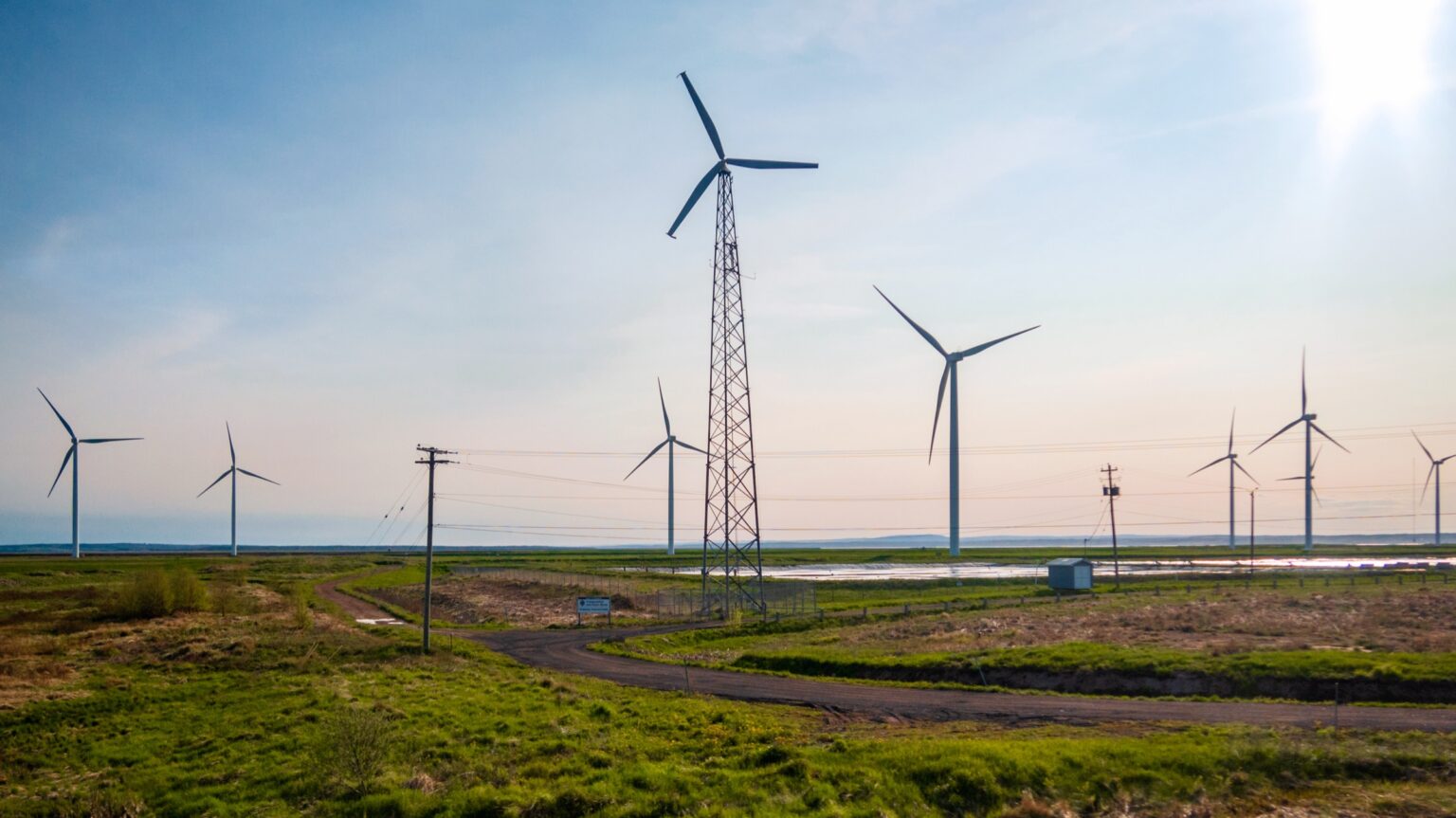
Atlantic Canada’s clean electricity developments gained fresh momentum with a $100 million federal commitment to support offshore wind generation in Nova Scotia on Oct. 15, 2026. Announced by Tim Hodgson, minister of energy and natural resources, the funding builds on recent regional commitments and brings Nova Scotia closer to harnessing its offshore wind potential.
This announcement will help advance Wind West, the cornerstone of the Eastern Energy Partnership’s Atlantic Energy Strategy, by providing the wind, ocean, and transmission data developers need to make investment decisions. The broader strategy outlines regional ambitions for interties between New Brunswick and Nova Scotia, transmission cables between Prince Edward Island and New Brunswick, and electricity export to Quebec and beyond. Taken together, this work puts real numbers in front of investors — measured wind speeds, surveyed seabeds, and a credible route to market — in time for the first-ever offshore wind Call for Bids, which the Canada–Nova Scotia Offshore Energy Regulator will launch in winter 2027.
This is just the latest ambitious electricity announcement from the Maritimes: over the past year, at least five critical announcements or memorandums of understanding have been announced, including:
- September 2025: Major Projects Office’s listing of Wind West as a transformative project that will support “building Canada for the future.”
This referral directed the MPO to work with other federal departments, provincial and Indigenous governments and the private sector to “make these projects a reality.” The project, as referred to the MPO, included both 60 GW of offshore wind development and the relevant cross border transmission needed to export it across the Atlantic region to Eastern Canada. - January 2026: Canada Infrastructure Bank provides financial support for Indigenous-owned Atlantic intertie
The CIB announced $285 million in funding for the Wasoqonatl Intertie, which will run 164 km between Salisbury, N.B., and Onslow, N.S. Of this $285 million, $54 million was earmarked for loans under the Bank’s Indigenous Equity Initiative. Themes of Indigenous reconciliation, reliability and regional grid security were evident throughout the text of the announcement. - June 2026: NRCan announcement of financial support for the P.E.I.–New Brunswick Interconnection Expansion Project
Minister Hodgson announced support for five intertie projects across the country to bolster reliability and increased electricity trade, including new subsea transmission connecting New Brunswick and P.E.I., and reinforcement for existing transmission between those provinces and Nova Scotia. Natural Resources Canada put further formal support to this project the following month, announcing $5.9 million for the PEI Energy Corporation to advance engineering studies, marine surveys, environmental assessments and preliminary route design. - July 2026: Maritime provinces commit to regional electricity cooperation and system integration
Following Minister Hodgson’s interties announcement, the premiers of Nova Scotia, New Brunswick and Prince Edward Island released an MOU committing to evaluate a Maritime Independent System Operator to boost economic growth, reliability and affordability. This included a commitment of financial support from the federal government. The agreement is explicit that closer regional cooperation is how the Maritimes improve affordability and strengthen the resilience of the Maritimes’ electricity system. These commitments are an important step toward Atlantic prosperity. - September 2026: Atlantic Canada Opportunities Agency releases the Atlantic Economic Panel’s “Bolder Ambitions: Greater Prosperity for All” report, calling electricity foundational to economic growth
This report made a clear call for greater economic collaboration among all four Atlantic provinces, powered by an integrated electricity grid to drive the region’s economic success. “A single, integrated electricity system is the foundation everything else is built on,” emphasized Atlantic Economic Panel chair Don Mills, echoing growing calls for better integration across the region.
This brings us to today’s announcement of $100 million to support Wind West. While this may be the largest initial commitment to the project’s infrastructure, it builds on a strong foundation of investments in Nova Scotia’s wind sector. This includes $25 million in NRCan funding and $206 million in CIB loans for Mersey River Wind, and nearly $5 million from NRCan to Net Zero Atlantic for a pre-feasibility project to inform transmission options for the proposed Wind West project.
This is another significant commitment in a growing list of ambitious electricity announcements from the Maritimes, all of which reinforce the same four themes:
- The importance of reliable, clean electricity to drive prosperity in the region,
- The need for increased collaboration to achieve these benefits,
- Provincial leadership supported by the federal balance sheet, and
- An ambitious vision to get big projects done.
Notably, the federal government is connecting these dots. In today’s announcement, Minister Hodgson specifically linked today’s investment to the recommendations of the Atlantic Economic Panel, and compared these efforts to the recent Churchill Falls agreement.
With a call for offshore bids planned to open in early 2027, today’s announcement is a launch pad for the billions of dollars required to secure the Maritimes’ position in Canada’s major projects boom. The first phase of Wind West alone is estimated to cost roughly $60 billion — including $40 billion in turbines and $20 billion in new transmission — and capital at that scale does not move on potential. It requires clear, de-risked opportunities. Today’s commitment provides a welcome measure of de-risking. Its real value lies not only in the $100 million committed, but in how it builds on earlier progress and reinforces the bold vision for prosperity, collaboration, and electrification taking shape in Atlantic Canada.
Much work remains, and most of it is harder than today’s announcement. Transmission is still the unsolved half of the problem: offshore wind only delivers prosperity to the region if the electrons can move. Where corridors get built, how costs are allocated, and who pays are all questions that still need to be answered. The commitments from the Atlantic MOU need to be fulfilled, and the regional ISO roadmap still needs to be built. The Call for Bids this winter will be the first genuine market test of whether the work funded today has done its job.
A vision for an Atlantic economic future — with electrification and collaboration at its core — is becoming clear. The provinces and the federal government should be applauded for the development of this increasingly clear vision of an electrified path forward for Nova Scotia, New Brunswick and Prince Edward Island.
Through the Atlantic Electricity Cooperation Initiative, Electrifying Canada will keep working with governments, utilities, regulators and Indigenous partners across the region to help turn these commitments into a system that works.
It’s time to set electrons free.